Top Podcasts
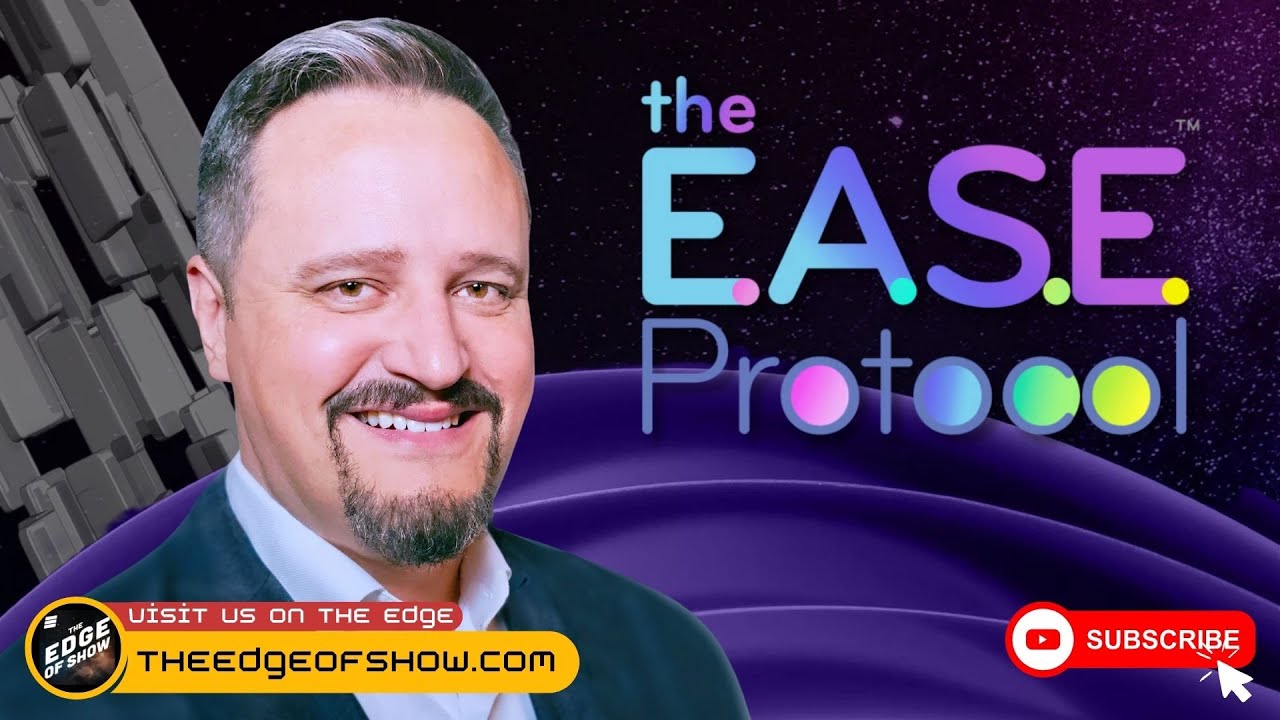
Building Bridges: How Ease Protocol Aims to Transform Government and Business with Blockchain
In a riveting episode of The Edge of Show, host Josh Kriger sits down live in Dubai with Douglas Horn, CEO of Goodblock and founder of Ease Protocol, to explore how Ease Protocol is redefining blockchain adoption. With a background spanning magazine publishing, film directing, and pioneering blockchain work on Telos, Horn explains his mission: make blockchain not just powerful, but accessible, compliant, and user‑friendly for governments, enterprises, and everyday users. From the innovative sequestered encryption key management system to modular, jurisdiction‑aware layer‑one chains, Horn details how Ease Protocol enables financial messaging, exponential liquidity, and no‑code smart contracts—all while preserving privacy and regulatory clarity. Whether you’re passionate about Web3, crypto, or enterprise blockchain, this was a masterclass in real utility over hype.
Key Topics Covered
-
Sequestered Encryption for Compliance How Ease Protocol uses Apple-style enclave key management to secure private keys in transit—unlocking regulatory visibility without sacrificing user privacy.
-
Modular Layer‑1 Built for Governments Deployable jurisdiction-specific blockchains with optional “regulatory mode” to satisfy court-ordered account control alongside open public use.
-
Exponential Liquidity Token Economy The EASE token underpins a novel liquidity model with far fewer pools and dramatically reduced impermanent loss.
-
No-Code Smart Contracts & Financial Messaging User-friendly “super app” interface delivers on-chain escrow, loyalty tokens or certificates, using wizards and business logic automation.
-
Cross‑Chain & Stablecoin Infrastructure Ease enables inter‑Ease and EVM bridges, supports ISO‑20022 integration, and facilitates stablecoin/CBDC deployment tailored to diverse regulatory frameworks.
Episode Highlights
-
“We need an Apple style user experience… making blockchain easier to adopt” — Douglas Horn
-
“Governments need a regulatory mode… with a court‑ordered rekey function” — Douglas Horn
-
“Sequestered encryption is the same as Enclave Keystore on your Apple” — Douglas Horn
-
“At 100 tokens, it’s 50× more efficient with liquidity” — Douglas Horn
-
“End users never use smart contracts, so we built no‑code deployment” — Douglas Horn
Transcript:
Josh Kriger: Welcome to The Edge of Show. I’m your host Josh Krueger and we feature a variety of top-notch guests and other hosts as well. It’s another production of The Edge of Company, a quickly growing media ecosystem empowering the pioneers of Web3 tech and culture. And it’s responsible for other groundbreaking endeavors like Outer Edge Innovation Festival in LA and Riyadh. Today’s show is brought to you by Ease Protocol and features Douglas Horn, the CEO of Goodblock and founder of Ease Protocol. He previously founded the Telos blockchain and helped develop innovations like Telos EVM, Decide Government Engine, and cross-chain bridging technologies. He’s now focused on making blockchain accessible and compliant for businesses and governments. I’ll also mention we are live in Dubai. Good to see you, Douglas.
Douglas Horn: Good to see you live in Dubai. It’s crazy, right?
Josh Kriger: Yeah, it’s been a whirlwind sort of week, and it’s been great to see sort of how excited people are about real applications of blockchain to make the world better again. It feels like the mean narrative is fading, and now it’s like, oh, utility. We like utility again.
Douglas Horn: Oh, we can do stuff. Yeah, it feels a little bit more grown up, a little less kid’s table.
Josh Kriger: Absolutely. And I’m honored to be a partner with you guys and to be part of your journey. We should let our audience know Ease Protocol is a blockchain platform built to meet regulatory standards, enable financial messaging, and make blockchain easier to adopt for real-world use cases. And we’ll dive into all that on the show.
Douglas Horn: Yeah. But in short, it’s like, we need an Apple style user experience, right. For blockchain to take off. And we also would be great if we didn’t have governments and regulated industries, you know, to be able to actually use blockchain without ruining everything that’s great about blockchain. That’s kind of in it. We’re trying to ease into that with ease protocol.
Josh Kriger: Absolutely. And I think, you know, I’m one of those guys that’s done a lot of different things. And I look at it all as sort of blending together to who I am and what I do now today. And you also have this interesting background from entertainment to blockchain, you know, where you sort of looked at the world from different angles in terms of the big problems that can be solved. And I’m curious, like, what initially sparked your interest in blockchain? because you’ve been involved in technology for your whole life.
Douglas Horn: That’s a great question. Yeah, since when I was like 19, I was writing magazine articles for computer programming magazines. Nobody knew I was 19, right? For me, it was like, hey, 60 bucks, all right. Um, and, uh, but I also took a time and worked for several years in, uh, in entertainment as a creative, uh, also on game development. And, uh, it all comes together, you know, like there’s, there’s skills we’ve talked about. Like if you can put together an independent film and keep everybody there and keep your vision and get it online, then you, then you’re, you can do almost anything. It’s very similar to, to the blockchain space, but. What got me involved in blockchain was I had been working in tech and I felt like I didn’t have enough faith in myself to, and my ideas when mobile and, and, um, web and all these things are coming. I had so many ideas. There’s so much stuff I thought, oh, this would be so cool, but I didn’t have the faith in myself at the time that my ideas were meaningful. And when blockchain came around, you know, 2015 or whatever, and I mean, I came into it, I said, no, I have all these ideas, I’m gonna really go for it this time, because I think they could be valuable.
Josh Kriger: Makes sense. So fast forward a little bit. You decided to create Telos at a time where the industry was having another sort of key precipice where you wanted to see adoption. And sort of you learned some things from that that led you to deciding to create Ease Protocol. Maybe you can kind of talk to us about sort of how TELUS led you to the sort of insights that you needed to now create Ease.
Douglas Horn: Yeah, so Telos was designed around having great governance, having access, and even providing some finance for small teams to come in. And because it was small and low cost, it was great for people in developing nations to come in. So it gave me a lot of access to builders who were coming from Latin America, Africa, places like that. Like really inspiring stuff, right? Because now they would have access.
Josh Kriger: And there’s a lot of unchained activity. I mean, what was the market cap at the peak approximately?
Douglas Horn: After about three years, there was a change. It was 400 million market cap, so approaching half a billion market cap. Not that much in crypto, but if you start from zero, which we did, no ICO, no secret funds, it’s kind of a lot.
Josh Kriger: Yeah, and you built the fundamental governance structures that you now realize could have more amplification capacity with a different sort of fundamental layer 1. That’s the gist?
Douglas Horn: I learned that it’s very hard for end users, it’s very hard for everybody, and I wanted to solve those problems. But I also wanted to make sure that these tools that we created on Telos could be updated and expanded because they were really useful. It’s almost a shame that they didn’t get used more, but we’re going to bring these things in and give them to everybody via use protocol.
Josh Kriger: So if you could describe ease protocol in one sentence, just to sort of break it down for everyone, what would you say?
Douglas Horn: It’s an ecosystem for building super performant layer one blockchains that solve the problem of user interface, make it easy for everybody and make it possible for governments to come in and use blockchain to make services easier and better and more efficient and less expensive for everyone.
Josh Kriger: makes sense. So compliance stands out as my mind as a key consideration. And I think, you know, when we sort of talk about how excited we are about adopting new legislation, sort of removing the ambiguity from the space, we now have to play by the rules too.
Douglas Horn: But at least there are rules, you know, like the From the U.S. space, the worst thing anyone can do is not make bad rules or arcane rules or whatever. The worst thing you do is make no rules, have it totally unclear, and then suggest that you’re going to regulate using old, non-applicable rules, right? And that’s what the system was in the United States. until the current administration comes in and they’re like, hey, let’s make Washington, D.C. the new crypto capital of the world. I’m like, great, finally, right? Like a lot of us who worked in the U.S. for so long have struggled and like, no, like we can’t, we want this here. And now the concept that, you know, that’s even been floated, like there may be no capital gains on U.S. based crypto projects, pretty exciting.
Josh Kriger: So specific to the world of compliance is there something that you feel like other blockchains aren’t doing or could be doing better that that ease can sort of resolve?
Douglas Horn: Well. No blockchain is really serving the needs of what a government would need. Like governments are finally ready to start using blockchain, but there’s nothing built for purpose, right? What do they need? Specifically, they need a very small set of functions that support their mandate to govern. Right? You can’t go in and be hardcore Bitcoiners and, you know, who I love and am in some ways, but I’m not trying to recreate that. You can’t say, sorry government, we’re going to thumb our nose at you and you can’t do anything. What they do then is they seize it anyway. That’s why we have a global, that’s why we have a Bitcoin reserve because it got seized. But the way they seize it is they seize it, you know, through leaning on people and it’s not fast enough. It’s not, there’s just so many problems. It’d be better if there was, If people could have complete control of their keys, except there’d be like a regulatory mode for blockchains that want to turn it on, right? When you deploy your blockchain, you’ve got regulatory mode and open mode. If you’re open mode, great, it’s whatever you expect. If it’s a regulatory mode, it means that there’s a function, one function, that allows a government with a court order to rekey an account to a court-ordered custodian until the end of the pre-deceitings, right? That’s what governments need, that and the ability to see all the actions on the blockchain. Now, every blockchain has that, except we’re going to bring in privacy. But in deploying privacy and looking at the various ways to do that for account, for end users, we said, well, the governments are still going to need to see this. So we use the gating technology instead of like a ZK proof technology.
Josh Kriger: So obviously, I think the government’s like, yeah, that sounds great. And there’s some traditional sort of decentralization maxis that are probably thinking, wow, Big Brother might be watching us now. Like, how do you respond to that sort of concern?
Douglas Horn: Well, I mean, Big Brother is watching us just as much as they’ve always been watching us, right? Everything’s available.
Josh Kriger: On-chain.
Douglas Horn: On-chain, off-chain.
Josh Kriger: I mean, chain analysis can find just about everything at this point.
Douglas Horn: They can find everything, right? Yeah. So that, I think, is a red herring. Going back to the, you know, look, Bitcoin security is fantastic and unbreakable. And yet, at the same time, there’s a bunch of seized Bitcoin. right? How do they seize it? Like I said, they lean on you, they ruin your life, they threaten to put your kids in jail. Like, I’m not, I don’t think that’s good, but in the end, they’re going to do what they’re going to do, right? Because they’re government, because they have the guns and the jails and the courts and everything, right? Anyone who thinks that they’re going to be able to escape that paradigm should look at, you know, McAfee, right? Nobody knew more about computer security than John McAfee. And he still lost his coins and died mysteriously in a Spanish prison, right? So, Unless you think you know a lot more than that guy did, and I know I don’t, right? Like, the idea of fighting government is very challenging, right? Maybe a better way is to give governments just the tools they need so they don’t overreach and grab for everything. Because if they want to use blockchain, they will, but they’ll develop their own and it’ll suck. right? Let’s as an industry, let’s develop something that they can use that also supports the needs of all our users, right? Because we know much better, right? They’re not experts. We’re experts in how to serve the people who are using this. And I mean, all the people who haven’t started using it yet, right? That’s what we’re trying to do. We’re trying to say, look, even with some small concessions, blockchain system is going to be far better than what we have now, far, far better, as long as we preserve the good things about it, which we do. So that’s my approach.
Josh Kriger: So with that in mind, I guess part of your secret sauce is a technology you call sequestered encryption.
Douglas Horn: Right.
Josh Kriger: Can you talk to us a little bit about what that is?
Douglas Horn: Sure. So sequestered encryption is, the easy way to describe it is it’s the same thing as Enclave Keystore on your Apple. So we didn’t really invent anything. We just took something that is very common, everybody uses and trusts already, and applied it to a blockchain model. So instead of being a part of a chip, it’s a server, you know, a protected server. So now the way that, so our sequester management system, the way that this works, the same way that Enclave Keystore works is, Private keys are generated on the sequestered key management system or on clean key space. They’re generated there, they’re never transferred. They’re stored in encrypted form and only the owner has access to the decrypted key for the private key and that is only decrypted in transit. So it’s not sitting around, right? This is state-of-the-art. This is Apple-designed system. We’re just saying, yep, that’s the right way to do it and applying it.
Josh Kriger: So… Has anyone ever applied this to… I think so.
Douglas Horn: Yeah. Look, I think a few, but we’re not rolling our own anything, but it’s not widely used. And, you know, this is… Ease, by the way, it stands for easy adoption, sequestered encryption. And we could have called it Easy Adoption Enclave Keystore, but it’s just not as good an acronym. We want to remind ourselves this is always about making things easier, about easing the path for people coming in, about ease.
Josh Kriger: Yeah, so I should sort of say that the secret sauce is the combination of the sequestered encryption with a different approach to the user experience that you’re proposing that sort of ideally changes the game. We’ve seen sort of companies trying to make getting a wallet easier, trying to buy Bitcoin easier, other crypto. We’ve also seen sort of this idea of sort of having email access now through EtherMail. But you’re talking about something more radically different, which is sort of an easy to use L1.
Douglas Horn: Yeah, a series of them that are specific to each jurisdiction, right? Because the state of Wyoming is going to need their own. The country of UAE is going to need its own. There’s not one master one. The reality of working with governments and industry groups and regulated industries is a lot of them are going to need their own.
Josh Kriger: So do you have to customize the SDK for every single user?
Douglas Horn: Uh, no, it’s, it’s designed to be very modular and they, they pick out their features they want. Do you, so it comes with like, uh, in, it comes with messaging, right? It with, so it’s a super app interface, right? They use a simple sign on single click actions, but it’s in, it’s like a super app like WeChat or, or Coco talk in South Korea, right? Which is a great format. It has messaging built in. Now the community can decide whether it’s going to be. end-to-end encrypted messaging, which we have using the signal ratchet system, or something else, right? The governments may want that, they may not want that. But certainly in the open mode, open mode ones, blockchains will be wanting to use the encrypted. But you’ve got messaging set up. You’ve got payments. You can set up how these payments work. There’s a liquidity system called Exponential Liquidity, which is fantastic. It’s just what it sounds like, and it’s the most efficient liquidity system yet. And they can turn it on or turn it off, right? It’s all modular. The people who set up the blockchain are the people who decide what the parameters are.
Josh Kriger: And can you add new parameters later?
Douglas Horn: Sure, I mean Ease Protocol Inc, right, is all, that’s what we do. We’re always going to be constantly adding things.
Josh Kriger: But if you want to, you know, maybe I don’t, I didn’t want messaging and then a year later, actually I do want messaging.
Douglas Horn: Well, anything can be done on computing. I think everyone will want messaging. The question will be whether they want to allow it to be end-to-end encrypted or not. And yeah, anything can be done. There are certain things, you know, in consensus that may be more difficult to change. But yeah, I mean, it’s computer software. You can do pretty much anything.
Josh Kriger: So with regard to the messaging part of it, I am curious, like, is this sort of a replacement for WhatsApp or Signal or, you know, whatever internal messaging tools they’re using today? Or is this messaging with a very specific sort of financial use case?
Douglas Horn: So it’s messaging that is generally there to promote and facilitate transactions on chain. And not, you know, those can be financial, that can be, hey, I’m selling you my bike, you know, how much, blah, blah, blah, blah, okay, great, send me, you know, I like the price, send me a Estro contract from the no-code smart contract thing, you know, for five cents or whatever, and then you pay the money into that, right? That’s great, but, Yeah, that’s what it’s used for. I don’t think people are going to use it as Slack.
Josh Kriger: Yeah, yeah. But it’s a really important use case that I think has a lot of value. I just moved out of a place in LA, and one of the problems with Facebook Marketplace is the transaction has to occur in person. You don’t know this person. They’re in your house. They’re giving you money. Is it real money? Is it not real money? You know, it’s the one part of Facebook Marketplace that’s a little dubious, but if that was done all on-chain, it was an escrow, they come in, you go, here’s the item. So, I mean, it’s a consumer analogy, but I think it shows the sort of value of financial messaging.
Douglas Horn: A hundred percent, right? I mean, look, it’s built into Venmo, right? Nobody uses Venmo messaging, I think, to run their company, but they use it when they’re buying and selling stuff, right?
Josh Kriger: If they want to brag about paying their friend for a pizza or something like that. Maybe, yeah. There’s a whole world of these people that are really into that, but yeah, it’s a little bit of a sidetrack.
Douglas Horn: I think there will be places that it becomes a preferred form, right? Like especially places that don’t have other methods of great messaging that’s in encrypted. We have privacy preserving social functions, right? So there’s a lot of things that I think We’ll make the tools and the users will decide how to use them. And I’m excited to see what they do. But the more tools we give them, you know, the more they can do.
Douglas Horn: Yeah.
Douglas Horn: I would not disagree with that.
Douglas Horn: Right.
Josh Kriger: Ah, that’s too bad.
Josh Kriger: Cool. So check out Ease Protocol.
Josh Kriger: Not to date your comic.
Douglas Horn: No, no, I’m old, let’s face it.
Douglas Horn: Yes. Got a few gray in them.
Douglas Horn: Yeah, they were.
Douglas Horn: All right. Call me an original.
Douglas Horn: I set decked this lovely set.
Josh Kriger: Uh, you came back around.
Douglas Horn: Yeah.
Josh Kriger: My pleasure.
People and Resources Mentioned
-
Josh Kriger (Host)
-
Douglas Horn (Guest)
-
Ease Protocol
-
Goodblock
-
Telos Blockchain
-
ISO 20022
-
Michael Turpin
-
Shreesha Chintamani
-
Bambo Shofala
About Our Guest
Douglas Horn is a seasoned technologist and entrepreneur. After launching his career writing programming magazine articles and directing indie films, Horn co-founded the Telos blockchain, pioneering cutting-edge governance, EVM compatibility, and cross-chain bridges. He now serves as CEO of Goodblock and founder of Ease Protocol, striving to make blockchain accessible, compliant, and scalable for governments, enterprises, and mainstream users. His leadership focuses on regulatory-friendly blockchain design and real-world utility.
Connect with Douglas Horn
-
LinkedIn: Douglas Horn
-
Website: EaseProtocol.com
-
Twitter (X): @Douglas_Horn