Top Podcasts
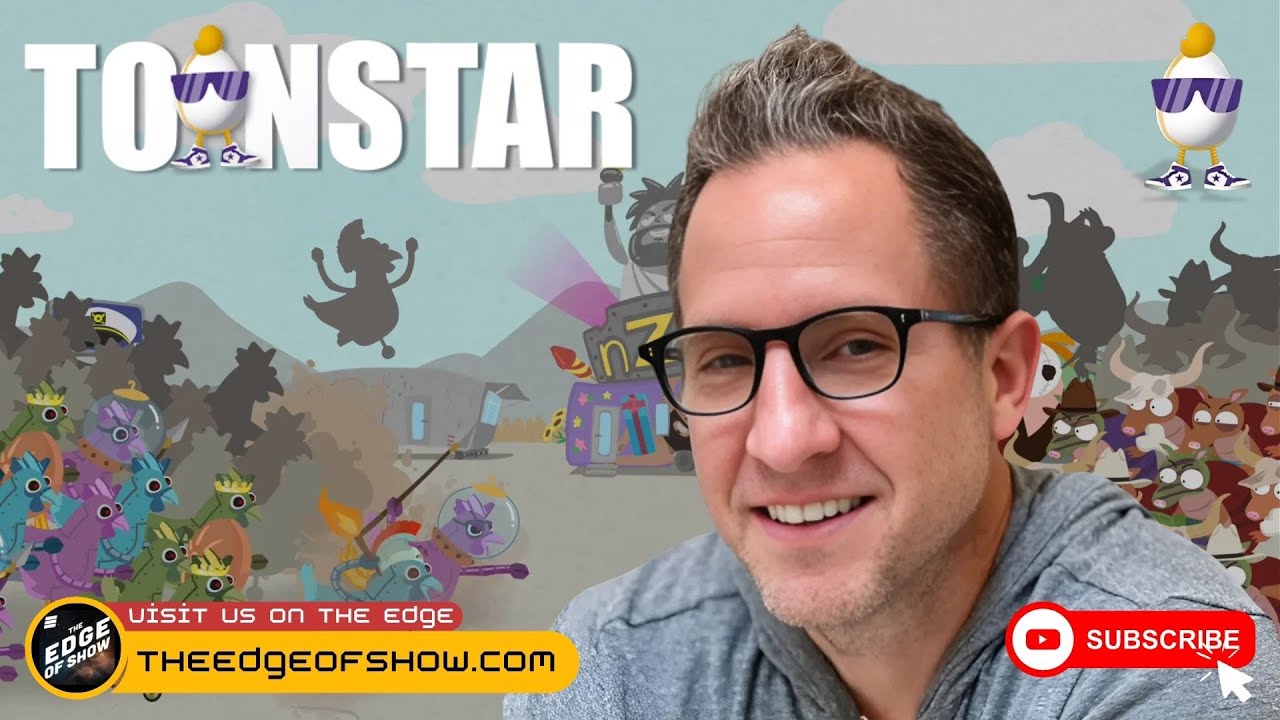
From Concept to Creation: How Toonstar is Shaping the Future of Animation with AI and Web3
In this groundbreaking episode of The Edge of Show, host Josh Kriger sits down with John Attanasio, the Co-Founder and CEO of Toonstar, to dive deep into the powerful fusion of AI and blockchain in entertainment. Before the writer’s strike and Hollywood’s AI debates reached headlines, John was already pioneering community-driven animation powered by blockchain tech and machine learning.
Live from Venice, California, in front of a studio audience, this episode unveils how Toonstar is revolutionizing interactive animation through projects like The Gimmicks and Space Junk. You’ll learn how Toonstar slashed production times from 18 months to just one week using their AI-powered animation stack and how community members can now co-create stories with AI tools in a fully on-chain environment. From South Park-meets-WWE-style narratives to co-creating NFT characters, this episode is your front-row ticket to the new frontier of Web3 media.
Key Topics Covered
-
**AI-Powered Animation Workflow: ** Toonstar built a proprietary tech stack using machine learning to automate facial expressions and character animation, allowing for episode production in under a week.
-
**Community-Driven Storytelling on Blockchain: ** Projects like The Gimmicks and Space Junk allow NFT holders to co-create storylines, submit characters, and influence plot arcs—recorded immutably on-chain.
-
**Real-Time Social Engagement with AI Characters: ** With Space Junk, community members interact with an AI character, “Wellbecca,” to generate backstories, visuals, and even comic panels in real time.
-
**Ownership and Royalties Through Blockchain: ** Toonstar enables perpetual royalties and on-chain provenance for community-generated content, ensuring creators are recognized and rewarded.
-
**AI Voice Acting and Narrative Personalization: ** The show features the first AI-voiced character in an animated series—adding nuance and personalization that evolves as the character “learns” to be more human.
✨ Episode Highlights
“We’re doing episodes in a week. That’s at least 60 to 80 times faster than traditional networks.” — John Attanasio
“To go direct to community, you need to produce at the speed of social media.” — John Attanasio
“Space Junk’s Wellbecca is a robot voiced by AI… and she becomes more human over time—by design.” — Josh Kriger
“With blockchain, if your story becomes part of a show, you get credit and royalties. That’s ownership.” — John Attanasio
“We saw a fan-favorite character in The Gimmicks explode with fan fiction. That became Season 2.” — John Attanasio
**Transcript:**
Josh Kriger: Hi, everyone. Welcome back to Edge of NFT podcast. Today, we’re excited to revisit an electrifying episode with John Attenasio, the co-founder and CEO of Toonstar. Before the writer’s strike ignited discussions about AI’s role in the creative field, John was already at the forefront of innovation, exploring how AI and blockchain can redefine interactive storytelling. And he actually practiced what he preached in some really fascinating ways with Toonstar. So in this conversation, he shares the origin story of Toonstar and how they’re pioneering community-driven experiences like projects such as The Gimmicks and Space Junk. And this episode is really critical to understand the current landscape of the intersection of blockchain and AI and entertainment, and to get your creative juices flowing on how you can apply AI to your project or your life. So I know you’re going to enjoy this one.
Intro : Welcome to The Edge of Show, your gateway to the Web3 revolution. We explore the cutting edge of blockchain, cryptocurrency, NFTs, ordinals, DeFi, gaming and entertainment, plus how AI is reshaping our digital future. Join us as we bring you visionaries and disruptors pushing boundaries in this digital renaissance. This show is for the dreamers, disruptors, and doers that are pumped about where innovation meets culture. This is where the future begins.
Josh Kriger: Welcome to The Edge of NFT with your hosts, Jeff Kelly, Ethan Janney, and Josh Krieger. The podcast that brings you the top 1% of NFTs today and what will stand the test of time. We explore the nuts and bolts of the business side and also the human element of how NFTs are changing the way we interact with the things we love. This podcast is for the dreamers, disruptors, and doers who are pumped about this ecosystem and driving where it goes next. Join us as we delve into the fascinating world of AI and Web3 and entertainment with our guest, John Atasnacio from ToonStar. This is a special episode, I should mention, as we are live in Venice, California at Kin with a studio audience. Let’s hear the audience. And alongside with our friends at Startup Coil and our great studio audience of curious technology aficionados who made this conversation possible. So let’s meet John, the co-founder and CEO of Toonstar, a next generation animation network designed for the mobile age. John is an alumnus of University of Southern California Marshall School of Business. Any other USC’s? in the house, a couple, cool. And Toonstar is a web 3 animation studio at the forefront of interactive storytelling and community experiences. They are the creative minds behind the Gimmicks, amazing project, an innovative community-driven animation NFT project that empowers creators and fans with creative control and commercial benefits. Let’s give it up for John. Hi. Hello. All right. So normally good afternoon.
John Anastassio: Good afternoon, Venice, California.
Josh Kriger: Good afternoon. So normally Ethan does the intro. That was probably my first time in my life doing the intro. How’d I do? Excellent. I thought it was really good.
John Anastassio: All right.
Josh Kriger: Yeah. Ethan, look out.
John Anastassio: I think you have a future in this.
Josh Kriger: Maybe. 250-something episodes so far. Let’s keep going. So look, Toonstar is pretty amazing. It’s creating a new world of possibility for creators. And I just love to kick it off and engage folks with sort of the genesis of it all.
John Anastassio: Yes, so how far back should I go to, like, childhood? We’ll go to childhood. We’ll start there. I mean, if it matters. Okay, okay, if it’s relevant. Yeah, I mean, so Toonstar, the best way to describe us is we call ourselves a web three story studio. I’m one of the founders. The other founder, her name’s Louisa Huang, and we both come from the studio world. So we met at Warner Brothers. Before that I was at DreamWorks and she was at Disney. So we spent a long time in the studio where we would say, better or worse, there’s some good parts, there’s some things that we think need some challenges. And basically came up with the idea for Toonstar. There were a couple things, like we were in the digital media group was our last role and we were doing a lot of experimentation at the intersection of technology and storytelling. We’re involved with a group, there’s, I don’t know how many people remember Maker Studios. It was one of the original sort of OG MCNs. So we were on the team that was sort of, you know, trying to figure out how to like, take the relationship with Maker Studios and integrate that into the broader studio. And, you know, it was a great experience, a lot of learnings. And I think what it did is it really kind of like opened our eyes to this idea of the creator economy. And this notion that creators can connect with fans directly. There was this really, you know, sort of interesting type of storytelling that was taking place. And I think that was sort of like the first like aha moment for us. It’s like, wow, like, you know, this whole idea of direct to community, direct to consumer is fundamentally changing in a lot of ways thanks to technology. And then the other part of it is like being in the studio system, we had a chance to work on a lot of animated properties. You know, fortunately, and I’m, spoiler alert, I’m Gen X, so I’m a child of Saturday morning cartoons. My brother’s a comic book artist, so I grew up going to Comic-Con before Comic-Con became what it is today. And we just, you know, it’s always like animation has always been an amazing storytelling medium to myself and my co-founder. It’s such a great way to build characters and character worlds. And it’s also a great commercial medium when you look at, you know, some of the most, you know, some of the most successful IP properties, they are animated properties. And so it was always odd to us that when you looked at the animation ecosystem, it was very much like a private club, and it was the same people on rinse and repeat, whether it was like writers, showrunners, voice talent. And that was always a head-scratcher, because to us it’s like, wow, this is such a great storytelling medium, why don’t more people have access to it? Do they all live in the valley, too? Yeah, maybe. I don’t know. They’re from everywhere. But I think that was the moment where it’s like, listen, there are so many creative voices out there. There’s so many diverse voices out there that aren’t getting a chance to tell their stories in animation. And you sort of put those two things together, and that was the inspiration for launching Toonstar. And I think the idea at the beginning was like, you know, what would Disney, DreamWorks, you know, look like today, given sort of the tools, technologies, and sort of what’s happening with creators and communities? And that’s, you know, enter Toonstar.
Josh Kriger: Great. And I think because you’re smaller, I think that it comes with some nimbleness and agility to try some new things, right? And along those lines, you guys have really been pioneers in the AI front. We just came from an event at UTA talking about AI. And I understand you’ve been doing a lot of speaking lately on the topic, given how newsworthy it is and how important it is in terms of where things are going. I’d like to sort of dive into how you’re using ai Specifically because i think these broader conversations are Exciting but let’s get specific and really understand the use Cases of this and how it applies to the entertainment industry Which, you know, we’re all part of in some shape or form if We live in la or we turn on tv or our phones, right? So let’s start with the production side of the house. And in ai, what have you done with ai? What’s been your sort of ai journey with production?
John Anastassio: Yeah, and so it’s on the production side and we’re in, you know, our company we’ve been around for about seven-ish years. And when, you know, we launched the company, the idea is that we really were focused on this notion of like, okay, if you’re going to build characters and tell stories direct to communities, and when we started, our focus was on social media. And if you’re going to do it on those kind of platforms, you’re going to need to come up with a, you know, completely different like production process and also build a new kind of like animation technology. And so that’s exactly what we did. So we built an animation tech stack. That allows us to do high-quality animation very quickly. It’s analogous to a gaming engine, so there are other types of technologies out there that do a similar type of thing. But really what it’s doing is it’s automating a lot of the labor-intensive processes of animation. Facial expressions, certain movements, that’s what the In this case we’re using machine learning which is a type Of ai, that’s what it’s doing. It’s very effective and we’ve Had a lot of success with that primarily because one, we’re Able to produce first and foremost a quality product but two, it Gives us the speed and the speed and this is sort of our I guess one of our kind of like thesis is Is that to go direct to community and direct to consumer, you need to be able to produce at a speed that they’re accustomed to, right? So if you think about social media, people, everyone, you know, I see people with phones, like you’re on it every, like, what, every five minutes sometimes, certainly every hour. So you’re on there and there’s a cadence that you expect, and that’s what you’re looking for in terms of content and conversations. So our belief is that you need to be able to produce somewhere in that area if you want to have success on social media. So that is, you know, that’s how we’re, you know, the… Again, the tech stack is machine learning that’s helping us do this production. But I think the real benefit is the speed, the quality and the speed. And then what that does, it allows you to have these really unique interactions with the audience. Because all of a sudden now, you’re creating characters that live in social media. And you can have these conversations near time, almost real time, but there’s a heavy cadence to it. And now, all of a sudden, you have a deeper connection to the characters, the content. Also, the content becomes more relatable because what you can do is you can drop in, you know, timely topical things. Like, we do a lot of, like, you know, pop culture type, you know, narratives. And so, we can take something that’s trending and all of a sudden drop that into the storyline. Now, all of a sudden, it feels more relevant and relatable. And again, all those things, the goal is to deepen the connection with the audience and that character.
Josh Kriger: And so that’s you know, I think that’s a interesting, you know sort of use on the one one use on the production side Yeah, yeah, I mean it’s it seems like a critical part of the puzzle that was missing otherwise to create a type of animated content that is very relatable to the current attention span of today’s consumer and So what’s the time savings there, if you could quantify it? You’re an OG in the world of animation relative to where we were before.
John Anastassio: Yeah, I mean, so if you look at the, you know, again, this is like, there’s a spectrum of how long it can take to do animated content. But traditionally, animated content, if you look at a series that is on a network, right, those can take a, you know, up to 18 months to produce, sometimes up to two years to produce. Now, there’s obviously a variation on that, but that’s if, you know, that’s what you’re looking at in terms of like something you might see on network TV. We’re doing, you know, we’re doing episodes in a week. And, you know, one, this is like a fun fact, and this is sort of some of the stuff we were doing prior to Web 3. We’ve got the largest animated channel on Snap Discover. And, you know, the thing that actually gets us is sort of like under, I think, underappreciated about Snap is that the audience we get actually is bigger than what you would see on a network TV. And I think a lot of people don’t either know that or don’t sort of give it the credit that it probably should get. But, you know, that, like, that sort of, you know, that is like, that’s a, I think, a really, a key way to, you know, leverage it.
Josh Kriger: I’m doing the math in my head. I think it’s at least like 60 to 80 times faster than where you are. I mean, that’s pretty incredible.
John Anastassio: Yeah, I was going to say, like, I was trying to do the math too, and that’s faster than I was doing. But to sort of break it down, it’s like we can do, we can do a five, you know, call it a five to eight minute episode in a few days. So that gives you a sense of how you know how quickly you can you can do it now You know you back bump that up against a network episode generally those run about to you know 22 minutes But you can you know that’s that’s about the speed that that we can do and interestingly The the thing that actually sort of slows it down a bit is less on the production side It’s more on the creative development side, which is the story writing and sort of storytelling part of it
Josh Kriger: So this crazy flashback came to my mind that I probably am not supposed to share out loud. But with the old election with Obama, in the Gangnam style trend, I had this idea to make a Gangnam style Obama video go viral. And I ran out of time, and someone else did it, because it took too long for my animator to do his magic. But if I had the technology you had, I would have beat college humor to the punch. That’s right. Exactly. Yes.
John Anastassio: You could have been relevant and had that viral video moment.
Josh Kriger: So that’s pretty cool. But you’re also messing around on other sides with the characters, too, right? Yeah.
John Anastassio: So that’s one use case. And again, on the production side, we’ve been using that for years. And, you know, you mentioned, so our first project in web 3 was a project called the gimmicks. We co-produced it with Mila Kunis, and it was actually the first weekly community-driven animated series in web 3. And, you know, we had a lot of success with that. You know, community’s been great. We just launched our third web 3 series in a year, two weeks ago. It’s called Space Junk. Space Junk stars John Heder, stars Tony Cavallaro from Righteous Gemstones, and it’s created by his name’s Dominic Russo. Dominic Russo is the creator of Workaholics. So you’ve got this, you know, crazy, talented, you know, team behind Space Junk. Creatively, which I could talk about. much time we have, but creatively the concept’s awesome. It’s about like the unsung heroes that are garbage men and women in lower earth orbit. So it’s a very, you know, we call it. It could be all of us after AI. Exactly. That’s maybe, that could be where we’re heading, exactly. But it’s, you know, we call it a workspace comedy. So creatively, you know, biased, but we think it’s, you know, it’s very funny. But the AI part of it is we actually have the first AI voice character in an animated series that’s in Space Junk. You know, which was, you know, it’s certainly got a lot of attention. And, you know, for us, we thought it was appropriate because it’s AI voicing a robot, so it’s a robot voicing a robot. And we thought there was something kind of like inherently, you know, funny about that. But the cool part about it is when you hear the voice, and this is kind of like part of the creative process, is as we were doing the voice, it actually sounded too human for us at the beginning. And we’re like, well, wait, we need to make this sound more like a robot. So we actually made it sound more like a robot because Part of the idea and the character arc of well becca is She’s a robot but as she hangs out with this crew she starts to Sound and sort of act more human over time. So it’s by design. So we had to sort of back it up and say, okay, let’s go more Robotic and then over time she’s going to start to sound more Human. All that’s done through ai.
Josh Kriger: And I feel like the humans are going to be more robotic if they spend too much time with her too, right?
John Anastassio: Right.
Josh Kriger: Yeah.
John Anastassio: They might start sounding more robotic.
Josh Kriger: Very cool. Yeah. And you know, you, you didn’t stop there in terms of your use of AI cause you’ve also applied it to, to social, which I think is one of the more interesting use cases. I was talking to someone before I was going to interview you and they were like, yeah, I haven’t heard, heard about that. Yeah. And, you know, it seems so relevant in terms of how is Ai going to integrate into the social experience of learning About content and being engaged and being part of a community. So i’d love to hear about those use cases.
John Anastassio: So that’s another use case we got into with space junk. And so the idea was first like, you know, and again, like, okay, how can we use AI in new different ways just, you know, beyond the production side. And so we’re like, oh, this is cool. We have a character named, well, Becca, who’s actually voiced by AI. What if we take her and actually make her the creative co-pilot for the community? So then we’re like, okay, this could be a really great use case for character generation, for story generation. Because part of the projects we do, the core theme to our projects are they’re community driven. They’re community driven storytelling, it’s community driven on chain experiences, but it’s all about the community and the community drives it. And so for us, it’s like, well, gee, why can’t we take AI, Put the ai in the hands of the community and let them use it Like chat gpt. Let them use it like dolly and Mid journey. And help them create their own Characters, help them create their own, you know, backstories And, you know, and sort of go, but all within the space Junk canon. And so what we did is we have a Character, well, becca, who is just that. And if you’re a token holder in You get to go to her, and she’s going to help you write your backstory for your character. She’ll also then help you take your backstory and then turn that into a visual representation of your character. And then she’ll help you turn that into a comic panel, and then turn it into an animated short. And so that all is being powered by AI in cooperation with the user, the community member, and they’re working together to create this cool thing within the space junk canon.
Josh Kriger: This audience is mature.
John Anastassio: Yeah.
Josh Kriger: That’s a big question.
People and Resources Mentioned
👤 About Our Guest
John Attanasio is the Co-Founder and CEO of Toonstar, a Web3 animation studio revolutionizing storytelling through AI and blockchain. A veteran of Warner Bros., DreamWorks, and USC Marshall School of Business, John co-created The Gimmicks and Space Junk—two of the first animated series allowing fan participation through NFT ownership and on-chain storytelling. Under his leadership, Toonstar has become a pioneer in real-time animated content, AI voice acting, and community-driven IP development.
LinkedIn: John Attanasio Website: Toonstar Twitter: @toonstarhq